
Practical information
Location
- Adress: Araotz auzoa 75, 20567, Oñati (Gipuzkoa)
- Email: arrikrutz@onati.eus
- Telephone: 943 08 20 00
Visits
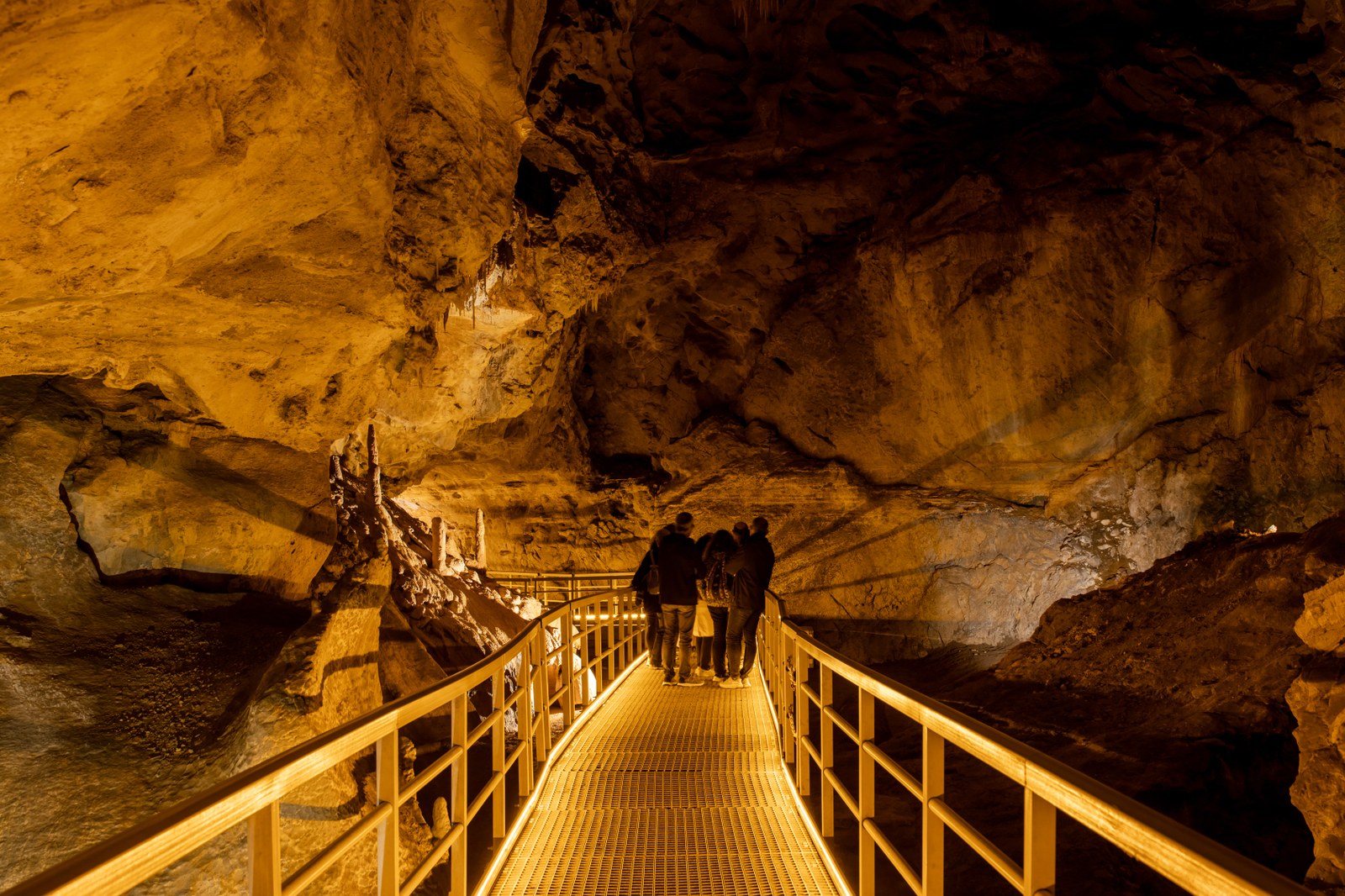
- Touristic tour on a walkway
- EspeleoTxiki, fun in family
- EspeleoArrikrutz, adventure in the cave
- Bookings: order online or +34 943 082 000.
Notes
- To visit the cave is mandatory to book a guided-tour
- No pets are allowed.
- Temperature inside the cave: 10ºC.
- It is essential to be at the Interpretation Centre 15 minutes before the start of the guided tour. (It is recommended to be in the parking lot 30 minutes before the visit).
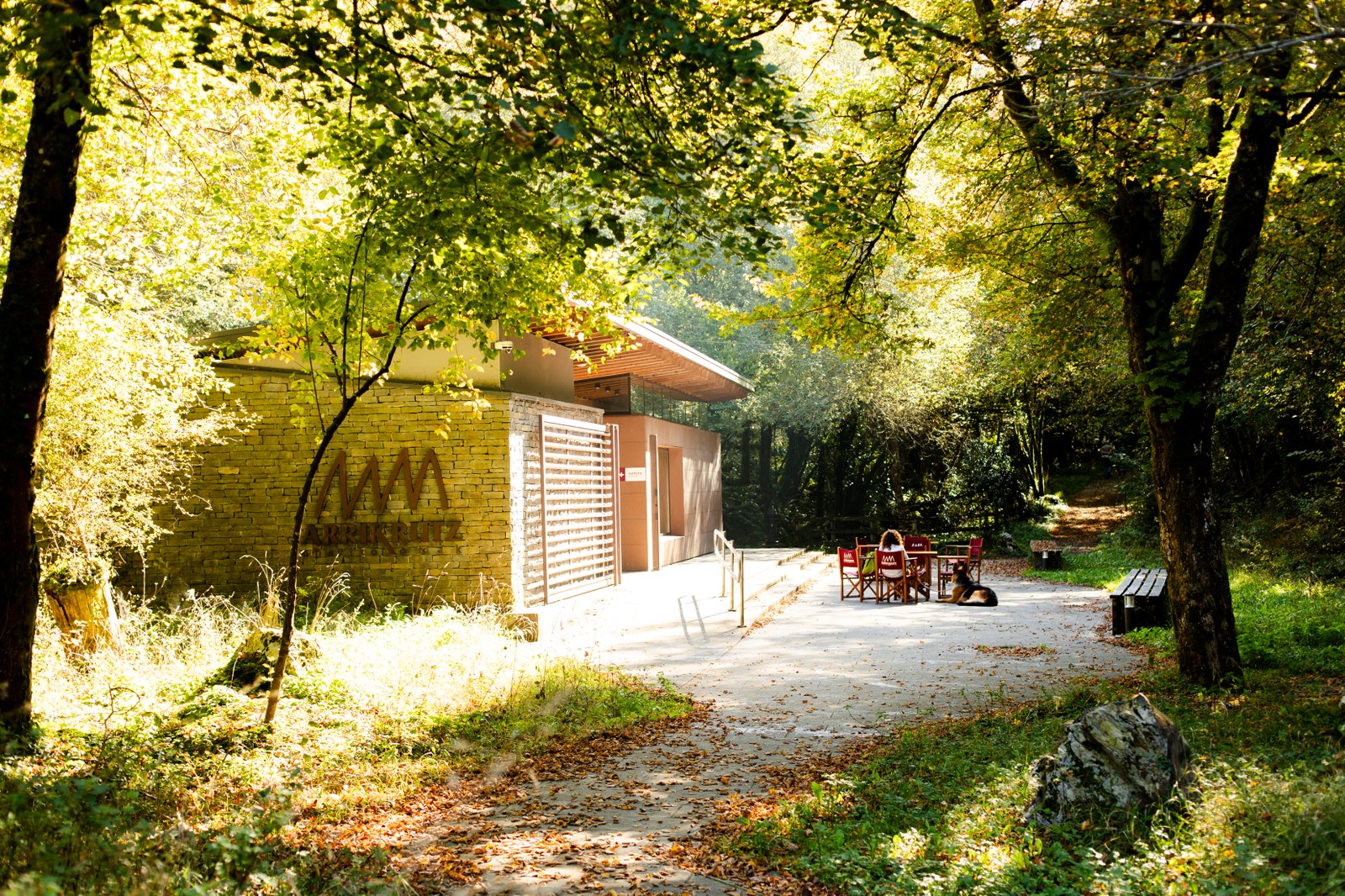
The Interpretation Center is the entrance point to Kobeta. It's about 200 meters from the parking lot. He informs the visitor of the discoveries in the cave, from which begins the exploration of the underground world.
The reception, in addition to being the point of entry merchandising in Kobeta, is also the starting point of the geological route. On this route the visitor will be able to see minerals and rocks of the Basque Country.
You have three types of visits to visit the airfield: a regular passerelle visit, EspeleoTxiki activity and EspeleoArrikrutz adventure.
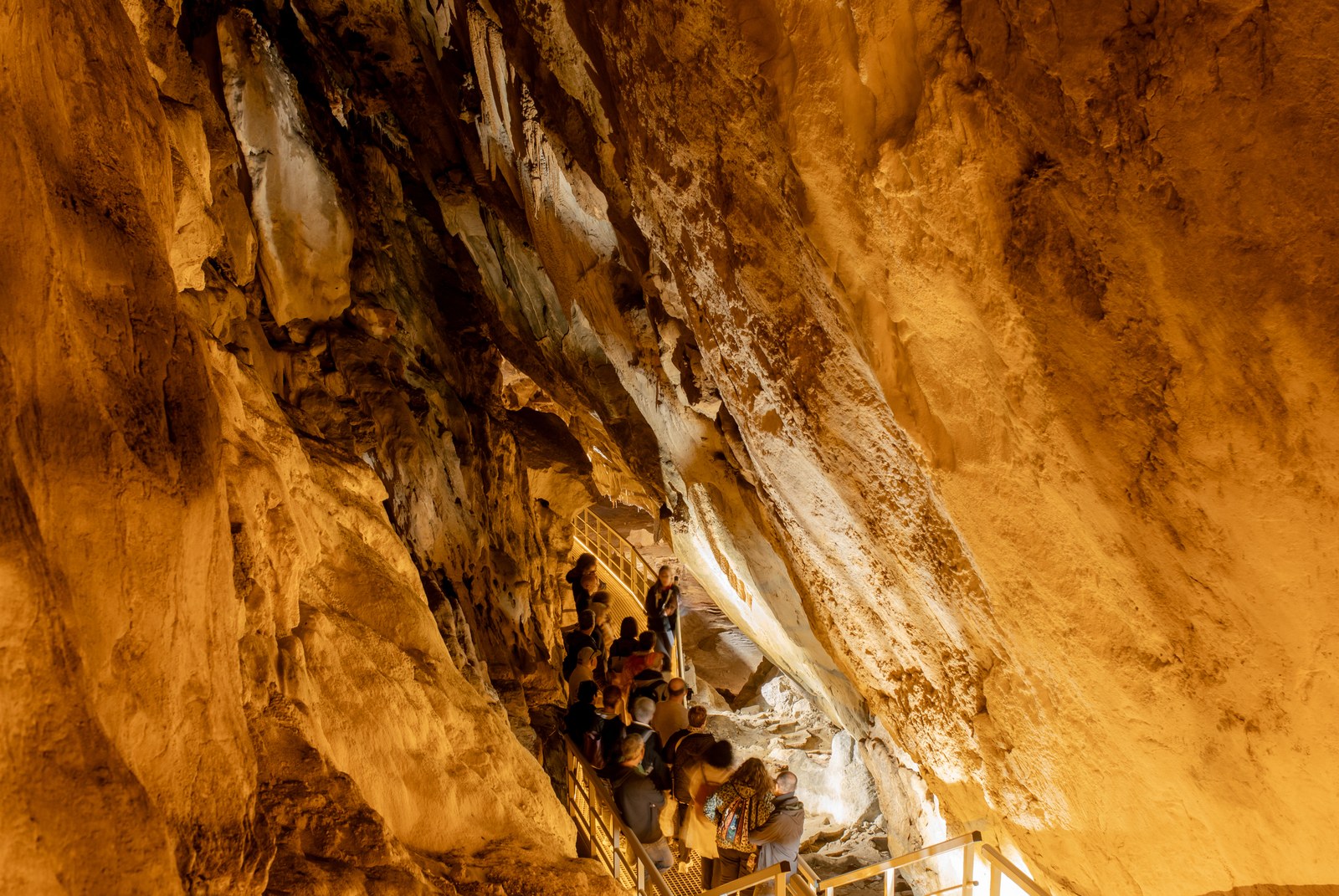
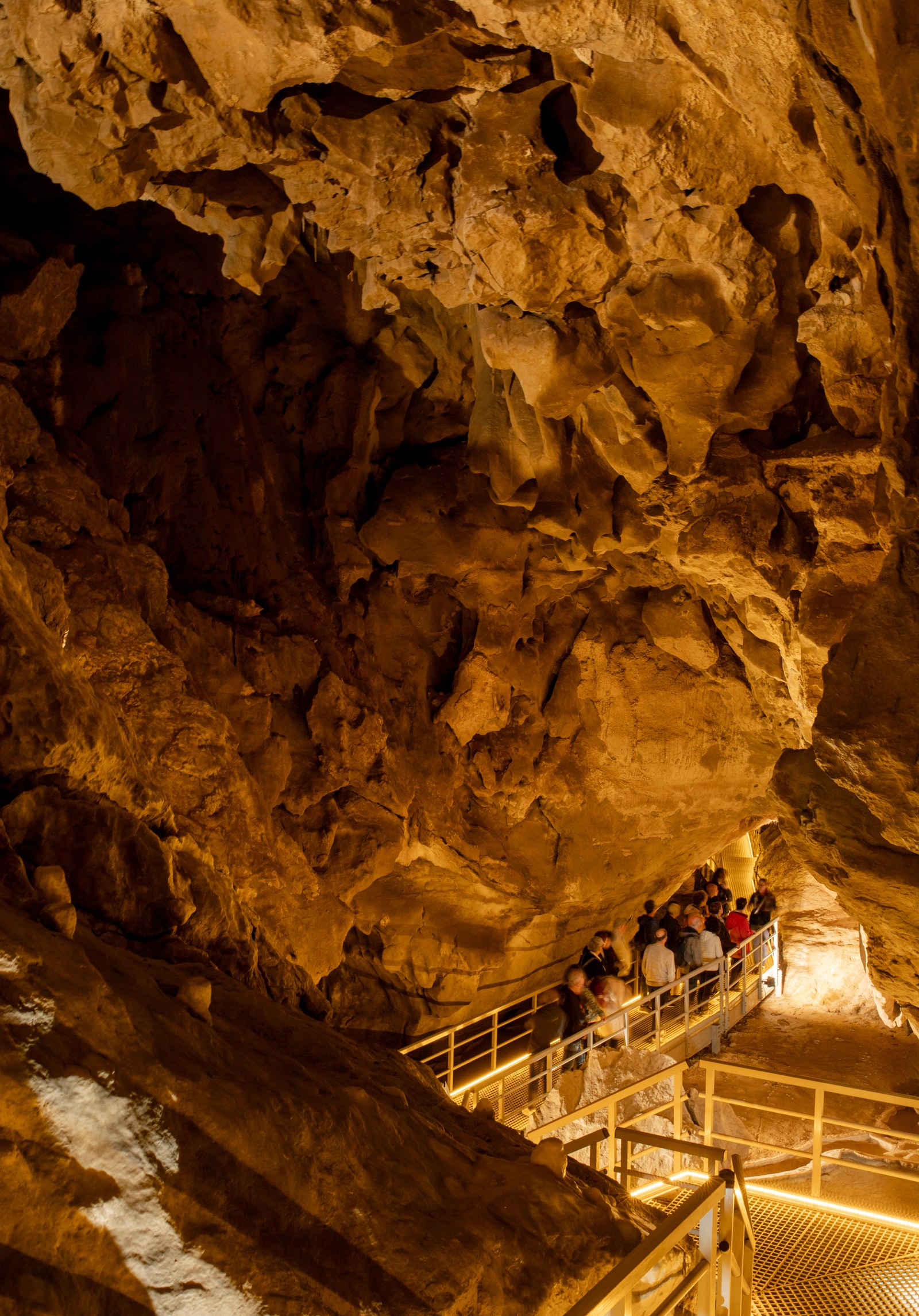
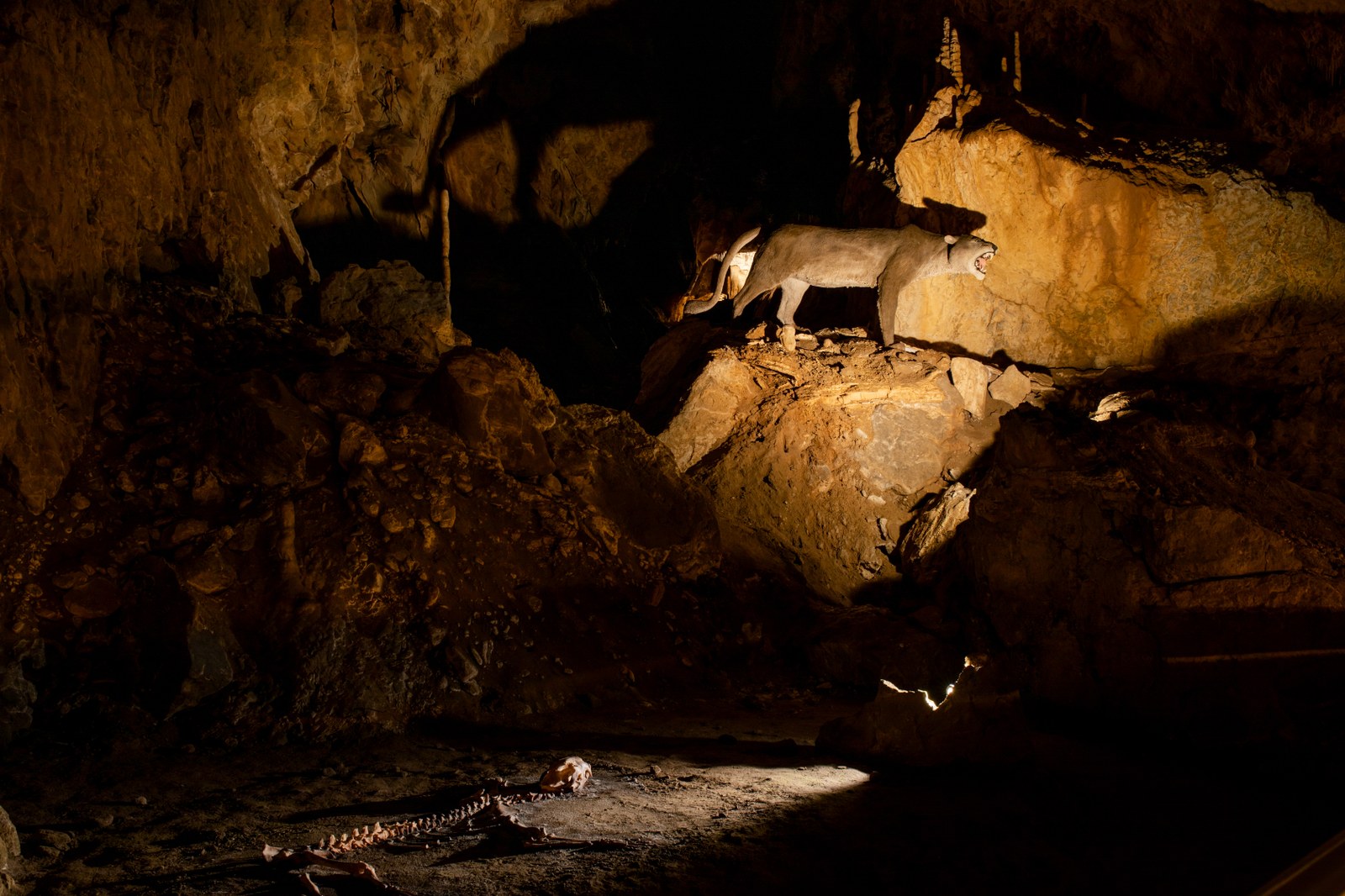
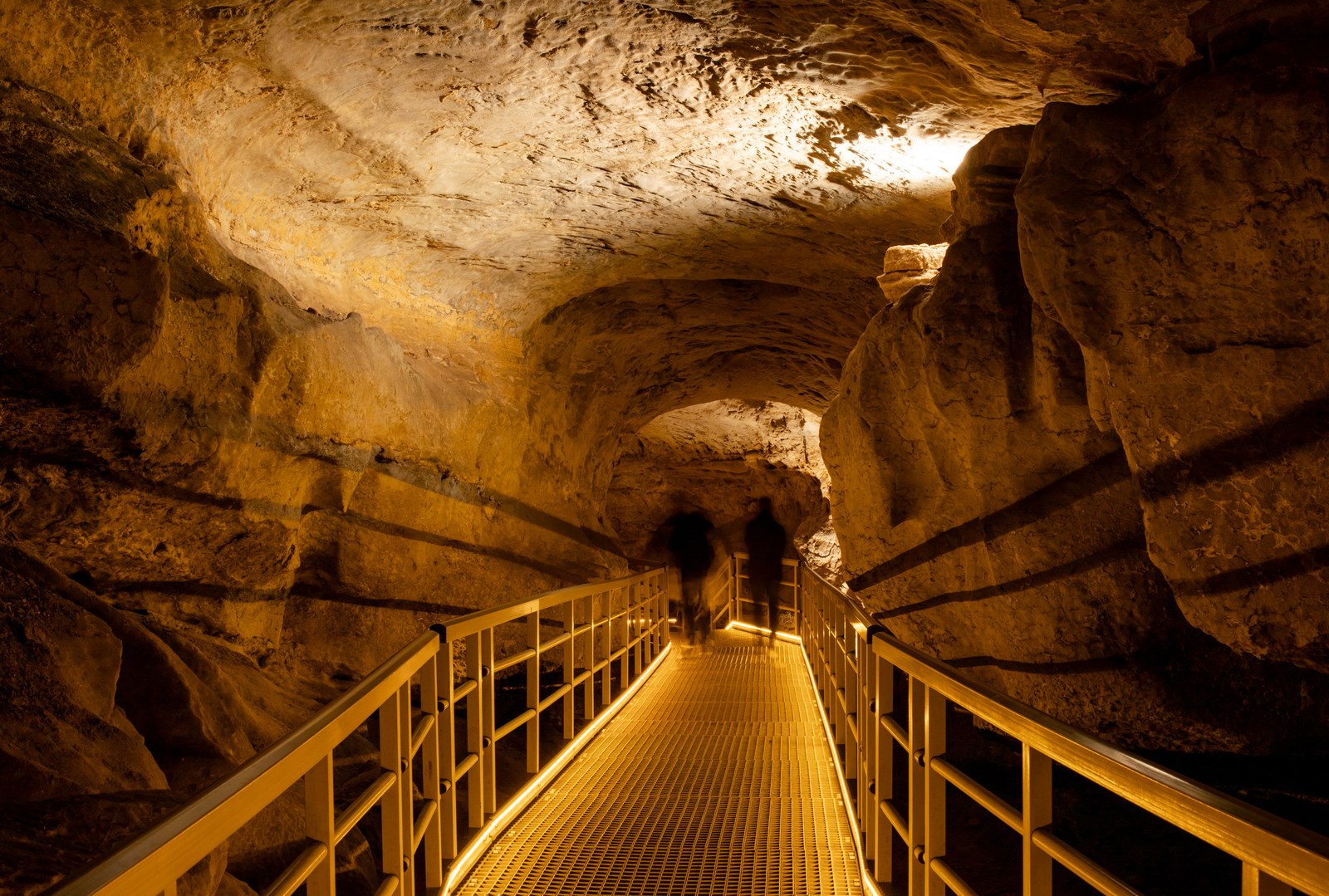
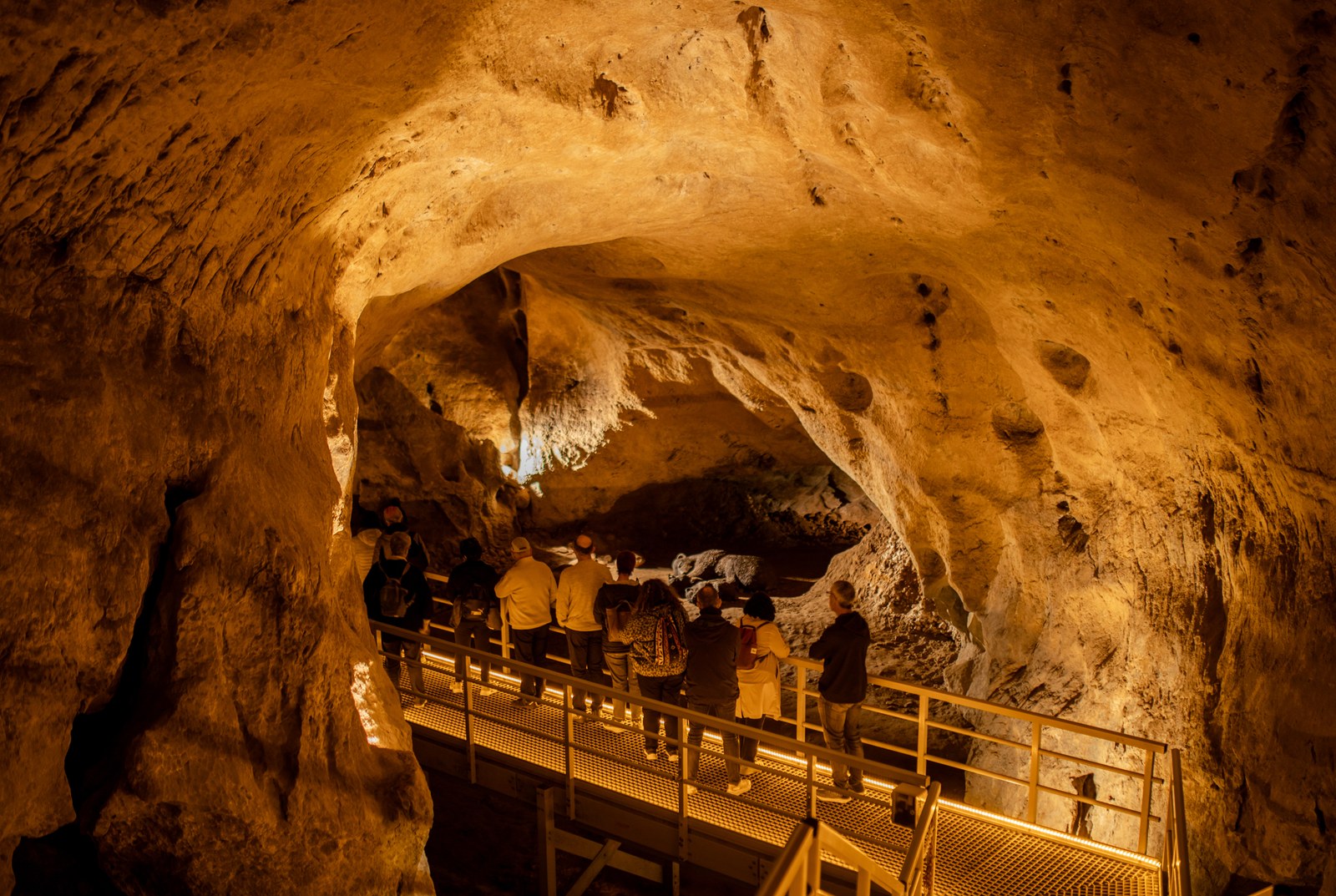
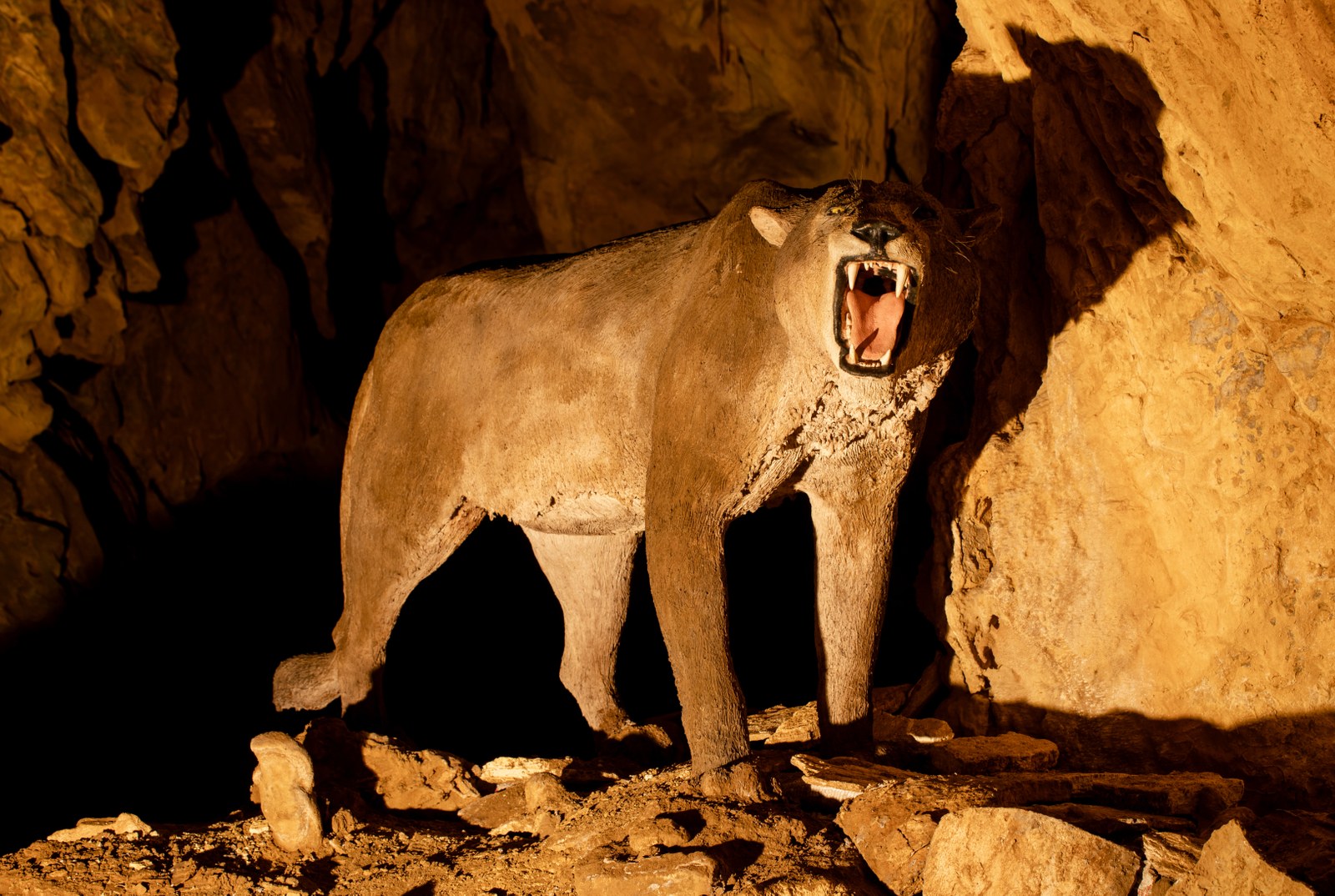
Arrikrutz: among prehistoric animals
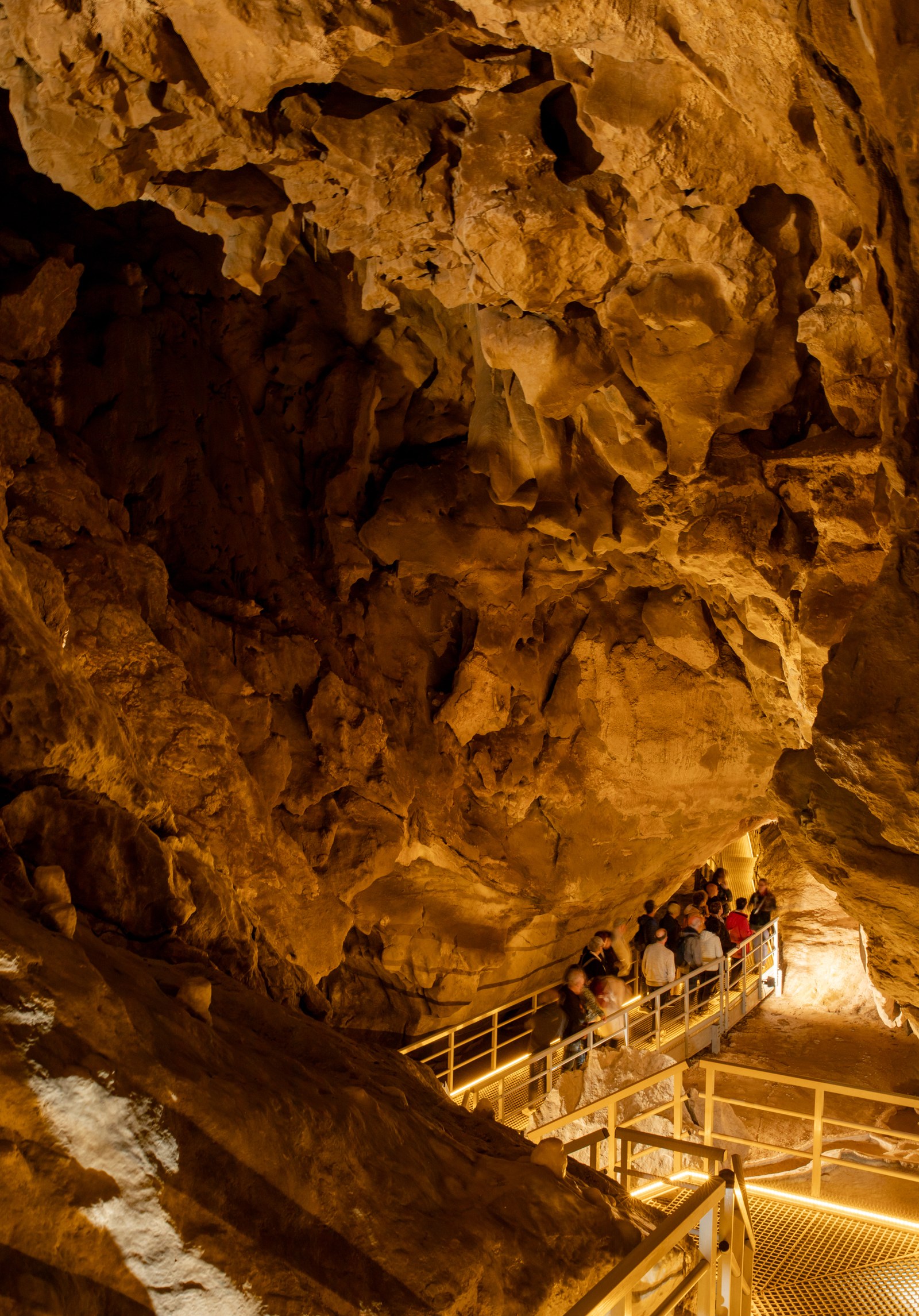
Oñati-Arrikrutz Cave is unique for the paleontological discoveries made. Traces of the Woolly rhinoceros (Coleodonta antiquitatis), the Cave hyena (Crocuta crocuta spelaea) and Irish elks (Megaloceros giganteus) have been found, and the various skeletons of the Cave bear (Ursus spelaeus) are worth mentioning too. Nevertheless, the most important discovery so far has been the complete skeleton of the Eurasian Cave lion (Panthera leo spelaea). This skeleton, vestige of one of the biggest felids in our surroundings, is the first discovery made in Spain.
Opening hours:
Octobre> wednesday-friday 10:00-17:00 / saturday-sunday 10:00-18:00
**During the Christmas and New Year period the cave will remain closed, on these days: 24th, 25th and 31st December and 1st and 6th January.